


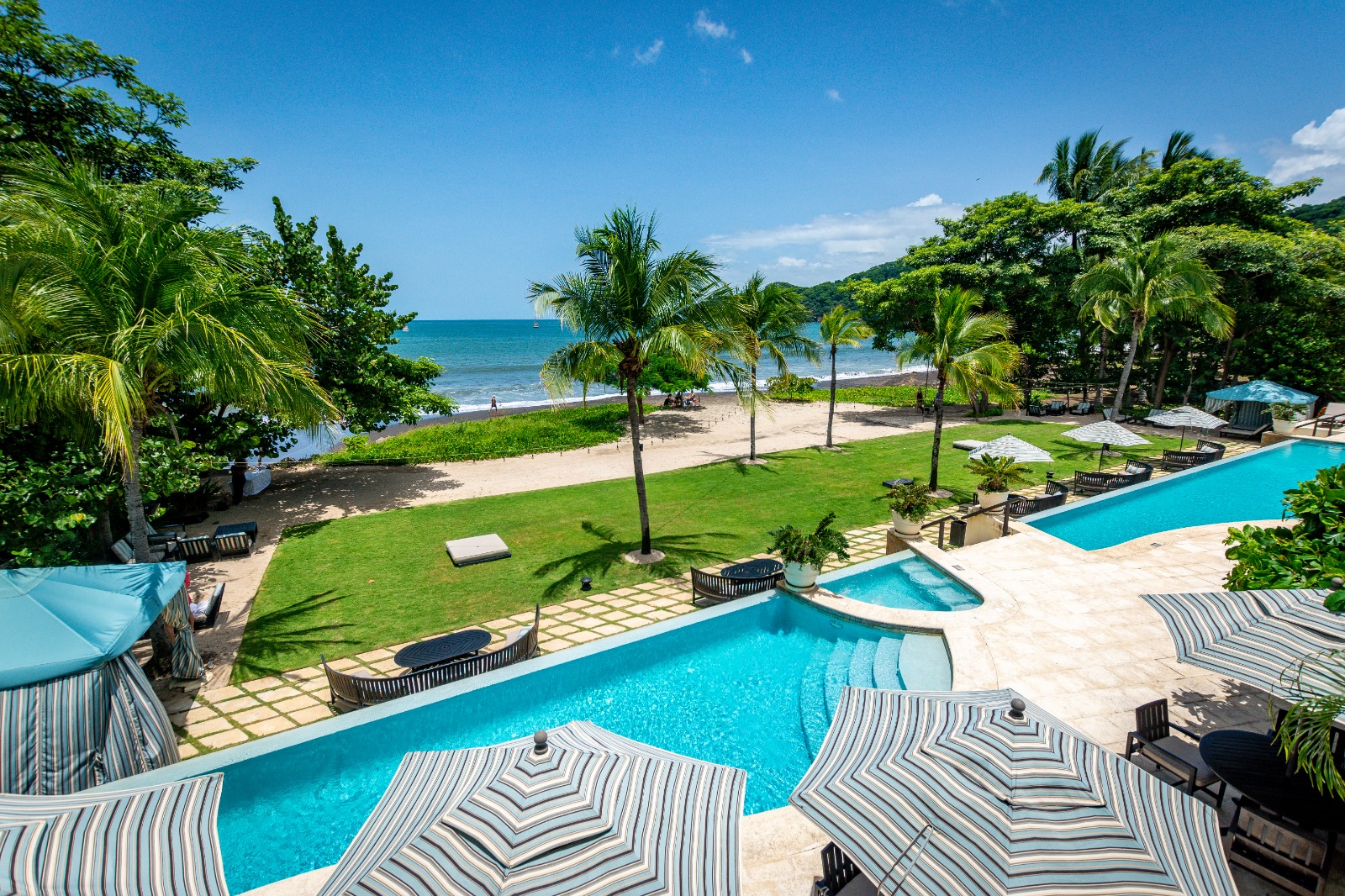
Brief Summary — Guanacaste has become one of the most attractive real estate investment regions in the Americas because of a specific combination of structural advantages: direct international air access through LIR, billions of dollars of committed luxury resort capital, limited beachfront supply protected by environmental law, expanding infrastructure, foreign-friendly ownership rights, long-running political stability, strong tourism demand, and established expat networks. The case for Guanacaste isn't about timing the market — it's about owning in a corridor where the fundamentals keep pointing the same direction.
Over the past two decades, Guanacaste — Costa Rica's northwest Pacific province — has evolved from a quiet expat and surf destination into one of the most globally recognized luxury real estate corridors in Central America. International buyers from the United States, Canada, and Europe have been steadily moving into the region, not because of any single year's market story, but because the structural fundamentals have kept pointing the same direction.
For a time-stamped view of current market conditions, see Is Costa Rica Real Estate a Good Investment in 2026?. The list below is the evergreen case — the ten structural reasons buyers keep choosing Guanacaste regardless of what any given year's headlines say.
1. Easy International Access Through LIR
Direct international access is the foundation of the Guanacaste investment case. Daniel Oduber Quirós International Airport (LIR), just outside Liberia, offers direct flights from major North American cities, and the most desirable beach communities — Playas del Coco, Playa Hermosa, Playa Panamá — all sit within 20 to 30 minutes of the terminal.
That compressed travel time is what makes part-time ownership and short-term rental investment practical. It's the difference between a property your guests book and one they don't.
2. Billions of Dollars of Luxury Resort Investment
When international hotel brands commit capital at scale, surrounding property values tend to follow. The Gulf of Papagayo corridor has absorbed more institutional-scale luxury resort investment than anywhere else in Central America.
Anchoring developments include:
- Four Seasons Resort Costa Rica at Peninsula Papagayo
- Andaz Costa Rica Resort at Peninsula Papagayo
- Nekajui, a Ritz-Carlton Reserve
- Waldorf Astoria Costa Rica Punta Cacique
- St. Regis Costa Rica (in development in Playa Panamá)
These projects raise the international profile of the entire corridor, attract a higher-spending guest base, and create spillover demand for nearby residential real estate. Buyers don't have to own inside a branded residence to benefit from the halo effect.
3. Strong, Durable Vacation Rental Demand
Tourism is one of Costa Rica's largest industries, and Guanacaste is one of its most-visited regions. That translates into vacation rental demand that isn't narrowly seasonal — beach towns like Playas del Coco and Tamarindo draw visitors year-round, not only during the peak December-to-April window.
Well-located condos and villas in walkable beach communities have historically performed well on short-term rental platforms. For the details on which communities produce the strongest rental results, see Best Condo Communities in Guanacaste.
4. Limited Beachfront Supply
Costa Rica protects its coastline with strict environmental and zoning regulations, including the Maritime-Terrestrial Zone (Zona Marítimo Terrestre) and extensive national park designations. True beachfront property is a structurally limited asset.
This matters because it flips the long-run supply/demand dynamic in favor of owners. Tourism keeps growing, global buyer interest keeps growing, and the amount of developable beachfront stays roughly constant. Scarcity is the underlying engine of long-term appreciation in the best coastal communities.
5. Expanding Infrastructure Around the Airport Corridor
Real estate follows infrastructure. The area around LIR has seen steady commercial build-out for over a decade: new retail, medical facilities, and services that make full-time living more practical.
Notable anchors include:
- PriceSmart — the warehouse-club format that changed grocery economics for expat buyers
- Solarium — a mixed-use commercial complex bringing modern shopping, dining, and entertainment closer to coastal communities
- Expanding medical infrastructure, including private clinics catering to international patients
- Ongoing road network upgrades connecting the coastal towns to the airport corridor
Each infrastructure layer makes the region easier to live in and broadens the buyer base for local real estate.
6. Foreign-Friendly Ownership Laws
Costa Rica is one of the most foreign-buyer-friendly real estate markets in the Americas. Foreigners hold the same property ownership rights as Costa Rican citizens and can take title either personally or through a corporation. No residency, special visa, or local partner is required.
Ownership is recorded in the Costa Rica National Registry (Registro Nacional), which provides transparent and well-protected title. For the mechanics of how foreign ownership actually works, including S.A. and S.R.L. corporate structures, see How Foreigners Legally Own a Condo in Costa Rica.
7. Long-Running Political Stability
Costa Rica is one of the oldest continuous democracies in Latin America. The country abolished its standing army in 1948 and has since invested those resources into education, healthcare, and environmental protection. Institutional continuity is unusual in the region and is a meaningful factor for investors thinking in decades rather than years.
For real estate buyers specifically, stability shows up as durable property rights, a reliable court system for contract enforcement, and policy frameworks that tend to survive changes in government.
8. The Lifestyle Premium
The lifestyle appeal of Costa Rica isn't a soft factor — it's a material driver of buyer demand and vacation rental occupancy. Guanacaste offers:
- Warm, dry-season-dominant tropical weather
- Pacific beaches ranging from surf breaks to calm Blue Flag bays
- Year-round outdoor activities — fishing, surfing, sailing, diving, hiking
- Pura Vida way of life
Buyers routinely describe their first investment here as both a financial decision and a lifestyle decision. The combination is what produces the rare return-on-investment that actually improves quality of life alongside the numbers.
9. Established Expat Networks
Relocation and part-time ownership are much easier when there's already a community on the ground. Coastal towns across Guanacaste — Playas del Coco, Playa Hermosa, Tamarindo — have long-established international communities with the services that make integration practical: English-speaking attorneys and accountants, international schools within driving distance, expat-serving medical practices, and dense social networks.
For buyers planning part-time or full-time residence, this network effect compounds the case for the coastal communities over more remote inland markets.
10. Long-Term Investment Runway
The reason investors keep choosing Guanacaste is that the combination of factors above is still compounding. Tourism is still growing. Luxury resort capital is still committing. Infrastructure is still building out. Branded residences and new communities are still breaking ground in the Papagayo corridor. Foreign-buyer interest is still broadening from just retirees to high-net-worth families and lifestyle-first entrepreneurs.
None of that means every property in every community will perform equally — location, HOA quality, and due diligence still separate winners from losers. But the macro tailwind is real, and it isn't a year-specific phenomenon.
Frequently Asked Questions
Can foreigners own real estate in Costa Rica?
Yes. Foreigners have the same property ownership rights as Costa Rican citizens, with no residency or special permit requirement. Property can be held personally or through a Costa Rican corporation.
Is Guanacaste a good place to invest in Costa Rica real estate?
Guanacaste has become the leading destination for international real estate investment in Costa Rica, driven by direct flights to LIR, billions of dollars of luxury resort capital, limited beachfront supply, and strong year-round vacation rental demand in its main coastal communities.
Which Guanacaste beach town is best for investment?
The best community depends on the investor's goals — rental income vs. lifestyle ownership, walkability vs. resort-amenity density, year-round demand vs. peak-season demand. The community comparison in Best Condo Communities in Guanacaste breaks down Playas del Coco, Playa Hermosa, Playa Panamá, Tamarindo, Punta Cacique, and the Playa Panamá St. Regis project on each of those dimensions.
How close are the main beach towns to the airport?
Playas del Coco, Playa Hermosa, and Playa Panamá all sit within 15 to 25 minutes of Daniel Oduber Quirós International Airport. Tamarindo is farther south, typically 55 to 60 minutes from the airport.
Is Costa Rica politically stable enough for long-term real estate investment?
Costa Rica is one of the oldest continuous democracies in Latin America, with no standing army since 1948 and a consistent emphasis on environmental and institutional continuity. For long-term real estate investors, this stability is a structural positive compared with many regional peers.
Closing Thoughts
Guanacaste isn't the right fit for every investor. Buyers who need highly liquid markets, formal MLS-style transaction transparency in every corner of the province, or the deepest financing options are better served by North American markets. But for investors looking for a combination of lifestyle, rental income potential, and long-term appreciation backed by unusually durable structural fundamentals, the case for Guanacaste has been strong for two decades and has only gotten stronger as the Papagayo corridor has developed.
If you want to see what that case looks like through the lens of current market conditions — GDP growth, rental yields, inventory tightening, the 2026 outlook — see Is Costa Rica Real Estate a Good Investment in 2026?.
Ready to explore what Guanacaste ownership would look like for you?
I've been working these specific communities for over 24 years. If you're weighing Guanacaste against other international real estate markets — or choosing between communities within Guanacaste — let's have a conversation about where your goals actually fit.
Start a Guanacaste investment conversation →
About the Author
Michael Mills is the Managing Broker at Tres Amigos Realty Group and has lived and worked on Costa Rica's Guanacaste coast for more than 24 years. Originally from Ontario, Canada, Michael relocated to the Playa Hermosa / Playas del Coco area after his third trip to Costa Rica in 1998. He completed his real estate training through the Costa Rican Chamber of Real Estate Brokers (CCCBR) in 1999 and is a member of the Costa Rica Global Association of REALTORS®. Michael operates offices inside the Hacienda Del Mar development and at Pacifico in Playas del Coco, and works alongside his wife Josta (who speaks six languages) and a team that handles media, marketing, and legal coordination for international buyers.