


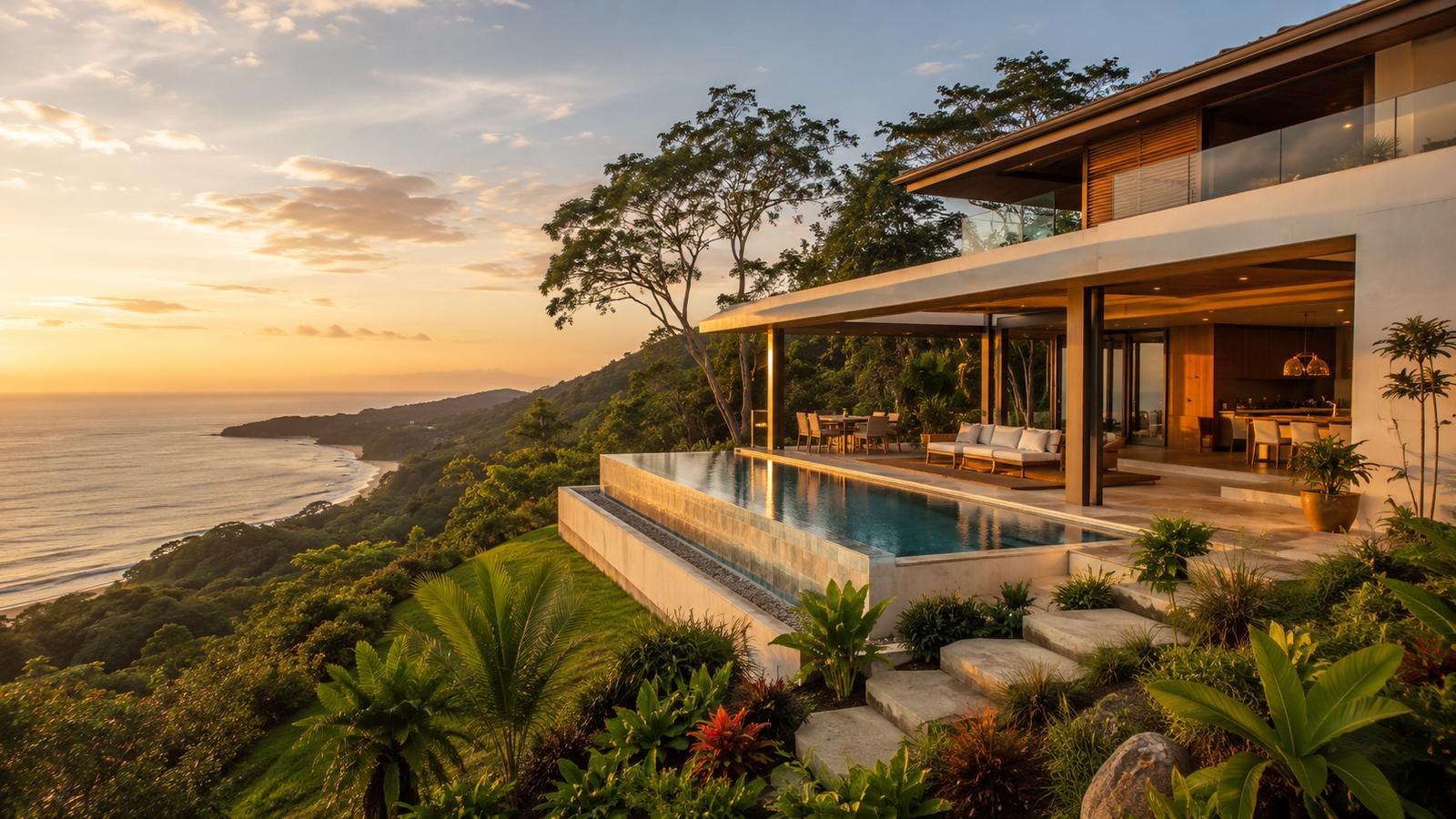
Yes — Americans and Canadians can get a mortgage to buy property in Costa Rica. Financing is available through a private international lender, Second Street, on property that is fully titled (fee-simple). That last condition matters more than anything else on this page, so it's worth understanding before you fall in love with a particular property.
Can Americans and Canadians actually get a mortgage in Costa Rica?
Yes. You do not need Costa Rica residency or citizenship to borrow. What you need is a qualifying lender, a fully titled property to use as collateral, and documentation that proves you can repay. Foreign buyers finance Costa Rican real estate this way regularly — the process is just different from a domestic US or Canadian mortgage, and the property type you choose can make or break your eligibility.
Who offers these mortgages?
Financing for foreign buyers comes from Second Street, a lender that specializes in cross-border loans for American and Canadian buyers. The key thing to know up front: Second Street lends only on fully titled, fee-simple property. It cannot finance concession (leasehold) property — more on why that matters below.
How much can I borrow, and how much do I need to put down?
You can typically finance up to 75% of the property value, meaning a 25% down payment, with a minimum loan of $150,000 USD. Closing costs in Costa Rica are separate from your down payment and generally run a few percent of the purchase price, so budget for those on top.
What are the rates and terms?
Rates start from around 8.25% (subject to change), with terms up to a 30-year fixed and no prepayment penalty, so you can pay the loan down faster without being charged for it. Loans are denominated in USD.
 Will I qualify? What does the lender need from me?
Qualifying comes down to documenting four things: your income, assets, credit, and identity. In practice, you'll be asked for:
- Two years of tax returns (to verify income)
- Recent bank or brokerage statements (to verify assets)
- Authorization for a soft credit pull — this checks your credit without harming your score
- A copy of your ID — passport or driver's license
If your finances are straightforward and documented, qualifying is usually not the hard part.
What if I don't qualify the usual way?
Not every qualified buyer looks good on a tax return — self-employed buyers, retirees living off investments, and business owners often have strong cash flow that two years of returns don't capture. For those situations, Second Street is developing a program that qualifies buyers based on cash flow shown through bank-statement history rather than tax returns. If your tax returns don't tell the full story, ask me whether this path is available for your situation.
What are the risks and limits I should understand?
Borrowing to buy abroad deserves a clear-eyed look. The main things to understand:
- You can only finance fully titled (fee-simple) property. This is the single biggest constraint, and it rules out a lot of beachfront. In Costa Rica, the first 200 meters inland from the high-tide line is the Maritime Zone, where property is held as a government concession — a long-term lease, not ownership. Concession land can't serve as fee-simple collateral, so it generally can't be financed through this route. That includes much of the Papagayo concession, which sits under a special tourism-development framework. If financing is part of your plan, focus your search on titled property.
- Currency. Loans are in USD. If your income is in Canadian dollars, factor in exchange-rate movement on your payments.
- Rate environment. Rates on cross-border loans are higher than a typical domestic mortgage — run your numbers at the actual quoted rate, not a US/Canada comparison.
- Title and due diligence. Because eligibility hinges entirely on clean fee-simple title, proper legal due diligence isn't optional — it's what makes the loan possible in the first place.
What does the process look like, start to finish?
- Pre-qualification — you share preliminary income and asset information and get an early read on what you can borrow.
- Approval — you submit the full documentation set (tax returns, statements, ID, soft credit pull) and the lender underwrites the loan against the titled property.
- Closing — final paperwork, funds, and transfer are completed with your attorney and the lender.
Starting the pre-qualification step before you're seriously shopping saves time and tells you exactly what price range and which properties are realistically in reach.
Where are buyers financing property right now?
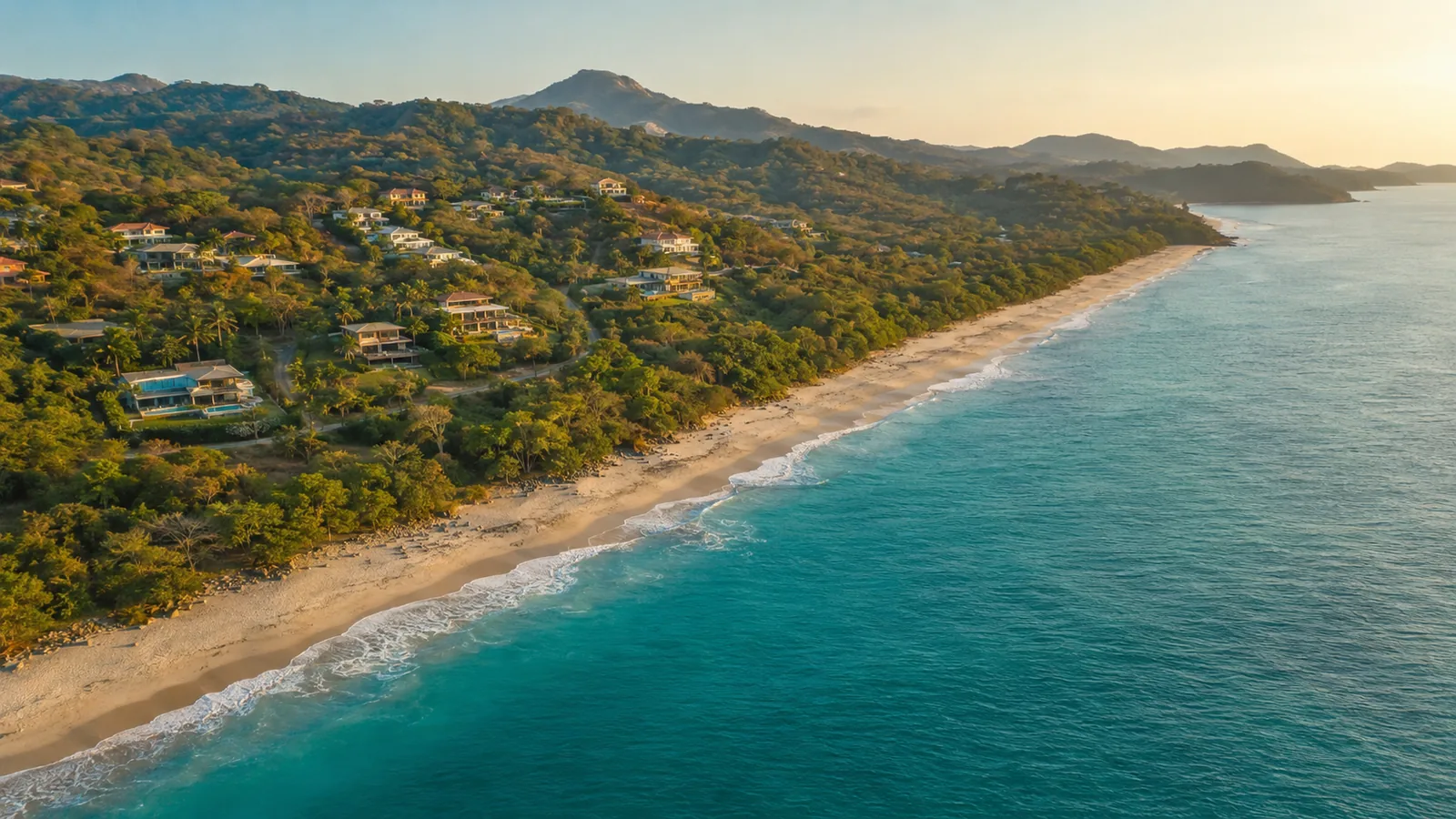 Because financing requires fee-simple title, the practical search list is titled property in Guanacaste's Gold Coast communities — Playa Hermosa, Playas del Coco, Playa Panama, Playa Ocotal and the surrounding areas — where titled homes, condos, and residential lots are widely available. Beachfront and concession property (including much of the Papagayo concession) is beautiful but generally outside what can be financed, so if a mortgage is part of your plan, that's the trade-off to weigh.
About the author
Michael Mills, Managing Broker
Michael Mills has guided American and Canadian buyers through purchasing property in Costa Rica since 1999 — 27 years working hands-on in the country's North Pacific market. He is a member of the Costa Rica Global Association of REALTORS® (CRGAR), and the National Association of REALTORS® (NAR), and works across Guanacaste's Gold Coast and the Papagayo region. He helps foreign buyers navigate every step of a Costa Rica purchase — from financing and due diligence through to closing.
Cell: 011-506-8867-6929 · Toll-free (USA & Canada): 1-877-293-1456
michael@costarica-realestate.com · www.costarica-realestate.com